
How to Report a Suspected Error in a Historical Entry
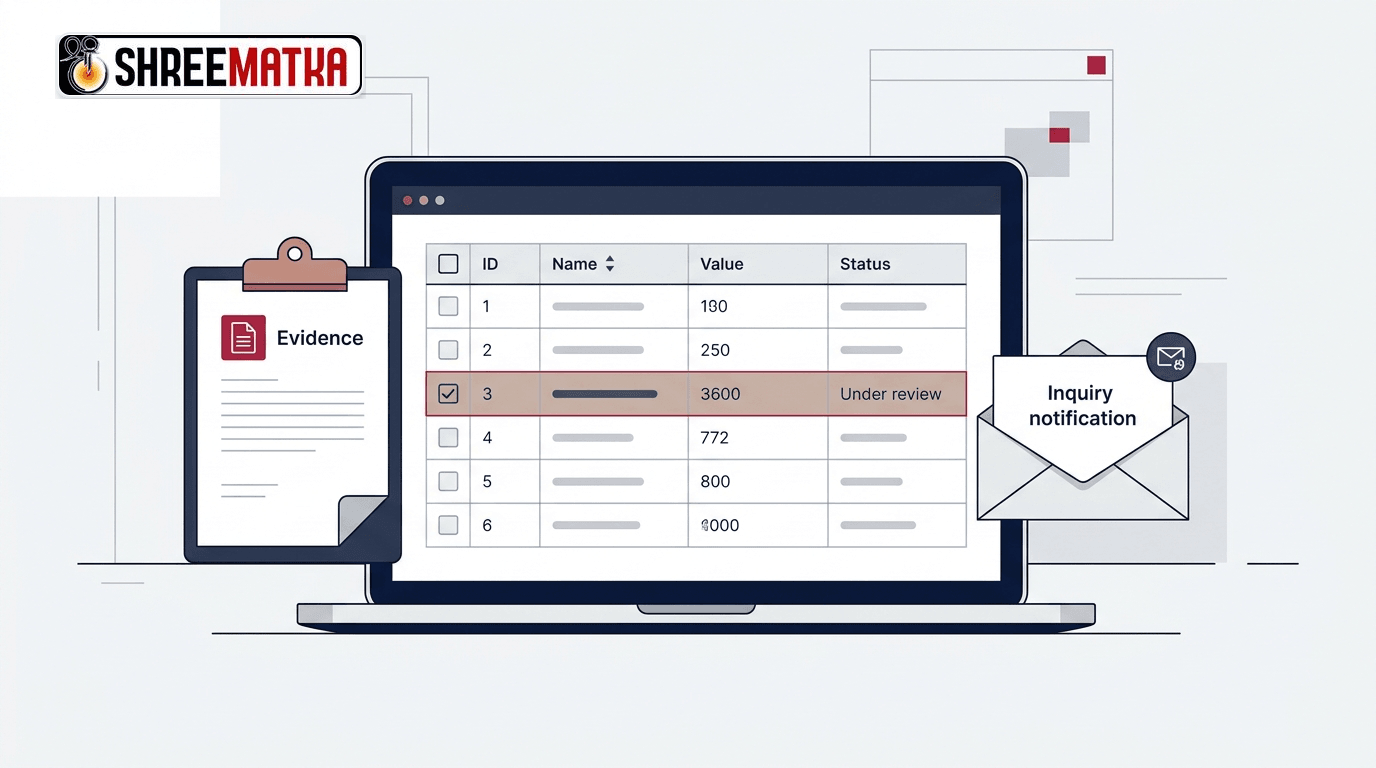
Large historical datasets that span decades of public records, market charts, and chronological tables will occasionally contain data discrepancies. Whether originating from manual transcription errors, optical character recognition (OCR) glitches during paper digitization, or server synchronization delays, identifying an apparent anomaly is a routine part of working with quantitative archives. However, there is a substantial difference between casually asserting that a record is incorrect and knowing how to properly report historical data error inconsistencies using structured, verifiable evidence.
When reviewing long-standing archives, submitting an unsubstantiated correction often creates confusion rather than resolution. Editorial and data curation teams receive thousands of inquiries; a message stating "Your table is wrong for last Tuesday" cannot be investigated effectively without exact technical context.
This guide outlines a disciplined, step-by-step methodology for examining a suspected error, distinguishing genuine transcription defects from routine formatting differences, capturing necessary technical coordinates, and submitting a clear inquiry through verified platform channels.
1. Isolate the Coordinates: Date, Category, and Surrounding Context
Before contacting any support channel, you must record the precise data coordinates of the figure in question. A common mistake is reporting an isolated number without its structural markers.
To build an actionable inquiry, record the following five coordinates:
- Exact Calendar Date: Document the date in full standard ISO format (
YYYY-MM-DD). Shorthand terms like "yesterday" or "last Friday" become meaningless once an inquiry sits in a queue across different timezones. - Market or Dataset Name: Specify the exact market line (e.g., Kalyan, Milan Day, Time Bazar, or Rajdhani). In extensive portals like the ShreeMatka charts index, dozens of regional markets run concurrently.
- Session Timing: Note whether the value appears in the Open session, Close session, or cumulative weekly summary.
- Specific Column Header: Identify the exact column header under which the cell resides (e.g., Panna / Panel, Jodi, or Derived Ank).
- Adjacent Values: Record the figures immediately preceding and following the entry. This allows data engineers to locate the exact database row even if dynamic sorting rules alter the visible row index.
Coordinate Inspection Example (Illustrative):
├── Target URL: https://shreematka.app/charts
├── Market: Kalyan Historical Archive
├── Date: 2026-09-14
├── Column: Open Pana
├── Displayed Cell Value: [ 1 - 2 - 8 ]
└── Surrounding Row Context: Preceded by 2026-09-12; Followed by 2026-09-15
2. Distinguish True Errors from Formatting Differences
Not every unexpected visual element represents a data defect. Before compiling an error report, determine whether the observed anomaly is simply an unfamiliar display convention:
| Observable Feature | Possible Technical Explanation | Is It an Error? |
|---|---|---|
Leading Zero Present (e.g., "04" vs "4") | Fixed-width string formatting preserving two-digit identifiers. | No. Dropping leading zeros is a format violation; retaining them is intentional. |
Dash or Hyphen ("-" or "--") | Indicates a declared market holiday, cancelled session, or non-operating day. | No. Reflects absence of activity, not missing data. |
| Blank Cell | Database null value where zero would be mathematically misleading. | Depends. Requires checking whether market was scheduled to operate. |
| Mathematical Sum Mismatch | The single-digit Ank does not equal the last digit of the 3-digit Panna sum. | Yes. Indicates a probable typographic or transcription error. |
| Inverted Chronology | Dates flowing newest-to-oldest instead of oldest-to-newest. | No. Standard descending display sort order. |
If the discrepancy involves a mathematical inconsistency—such as three panel digits whose sum does not produce the displayed single digit—this represents high-priority evidence of a transcription typo. Conversely, differences in hyphenation, spacing, or date presentation typically reflect front-end styling rules.
3. Capture Objective Evidence Before Reporting
Web pages are dynamic. Caches clear, content Delivery Networks (CDNs) update, and browser extensions can inject local scripts that distort page rendering. Before asserting an error, capture verifiable evidence:
- Capture the Full URL: Copy the exact browser address bar string, including any query parameters or hash anchors (e.g.,
https://shreematka.app/pana/kalyan?year=2026#row-42). - Take an Uncropped Full-Page Screenshot: Ensure your screenshot captures the browser address bar, system clock, visible table headers, and page footer. A tightly cropped snippet of four numbers lacks sufficient context for verification.
- Test in a Second Clean Environment: Open the identical URL in a private/incognito browsing session or on an alternative device. This ensures that a local browser caching conflict or an aggressive browser translation extension is not responsible for the altered numbers.
- Document the Secondary Source: If you believe the displayed figure is incorrect because another document shows an alternative value, cite that source objectively. Document the publication title, date, and archive link of the comparison document.
4. How to Submit a Report Through Verified Channels
When communicating with editorial teams, use only first-party contact mechanisms displayed on the official website. Impersonators and third-party social media accounts frequently claim to represent platforms while possessing no connection to the underlying database:
- Use Official Navigation Links: Navigate directly to the official platform footer or the dedicated data policy page to locate genuine contact routes.
- Avoid Unofficial Third-Party Intermediaries: Never share correction requests, account information, or personal communications through private Telegram groups, unofficial WhatsApp forums, or social comment sections. Official updates require direct communication with the site administrators.
- Never Expect Commercial Guarantees: Reputable historical archives correct typographic errors to preserve historical accuracy. They do not issue financial settlements, retroactive adjustments, or speculative advice based on error submissions.
5. Structuring a Constructive Discrepancy Inquiry
A well-structured inquiry allows data curators to reproduce, verify, and resolve a legitimate defect within minutes. State the facts neutrally without making accusatory or overconfident claims:
Subject: Potential Data Discrepancy - [Market Name] - [Date]

Hello Curation Team,

While reviewing your historical archives, I noticed a potential data discrepancy
in the following record:

- Page URL: [Insert full URL]
- Market & Category: [e.g., Kalyan Day - Panel Chart]
- Record Date: [e.g., 2026-09-14]
- Column Heading: [e.g., Open Pana]
- Currently Displayed Value: [e.g., 148]
- Mathematical Observation: [e.g., 1+4+8 = 13 (derived Ank should be 3),
  but the corresponding single digit displays as 5]
- Comparison Source: [Cite reference publication or archival scan with URL]
- Attached Evidence: [Attach uncropped screenshot showing full URL and timestamp]

Could you please cross-reference this entry against your primary source archives?

Thank you for your time and review.
By phrasing the communication as an objective observation supported by coordinates and mathematical rationale, you eliminate ambiguity and assist the maintenance of high-quality public records.
Summary Verification Flow
[Observe Discrepancy]
        │
        ▼
[Check Coordinates: Date + Market + Column]
        │
        ▼
[Rule Out Formatting: Leading Zeros / Blank Cells / Holidays]
        │
        ▼
[Capture Evidence: Uncropped Screenshot + Full URL + Timestamp]
        │
        ▼
[Submit via Official Platform Channels with Neutral Tone]
Frequently Asked Questions
1. Why do typographical errors happen in historical digital charts?
Historical records often originate from physical ledgers or early print publications. When these archives are transcribed by human data entry teams or processed through automated OCR software, visual similarities between digits (such as 3 and 8, or 1 and 7) can occasionally produce transcription errors that require manual cross-referencing to resolve.
2. What is the most critical information to include when reporting a suspected error?
The most essential details are the exact URL, the calendar date of the entry, the market name, the specific column header, and an uncropped screenshot showing the entire row in context. Without these coordinates, data editors cannot locate the disputed cell in a database containing hundreds of thousands of rows.
3. Does a difference between two websites prove that one of them is wrong?
No. A difference between two independent websites simply indicates a discrepancy; it does not prove which site is correct. Both sources may rely on different reporting feeds or regional print editions. Verification requires cross-referencing against primary documentation rather than assuming one website is automatically authoritative.
4. Will platforms pay rewards or change game outcomes for reporting errors?
No. Historical archives are maintained for statistical study, educational research, and informational reference. Corrections are implemented solely to preserve archival integrity and historical accuracy, not to alter past real-world outcomes or issue speculative rewards.
Disclaimer
Visiting and browsing this website is strictly at your own risk. All information available here is for informational and entertainment purposes only and is based on number calculations. We are not associated or affiliated with any illegal Matka business. We make every effort to follow the rules and regulations of the regions from which the website is accessed. There is a chance the website may be banned in your area; if you continue to use it after that, you alone are responsible for any damage, loss or legal action that may follow. Satta Matka may be illegal in your jurisdiction — please be aware of and comply with your local laws. Gambling can be addictive; players must be 18 or older, and underage gambling is strictly prohibited. If you do not agree with this disclaimer, please leave the website immediately. Copying any content posted on this website is strictly prohibited.