
Matka Pana Numbers Explained: Common Formats and Terminology
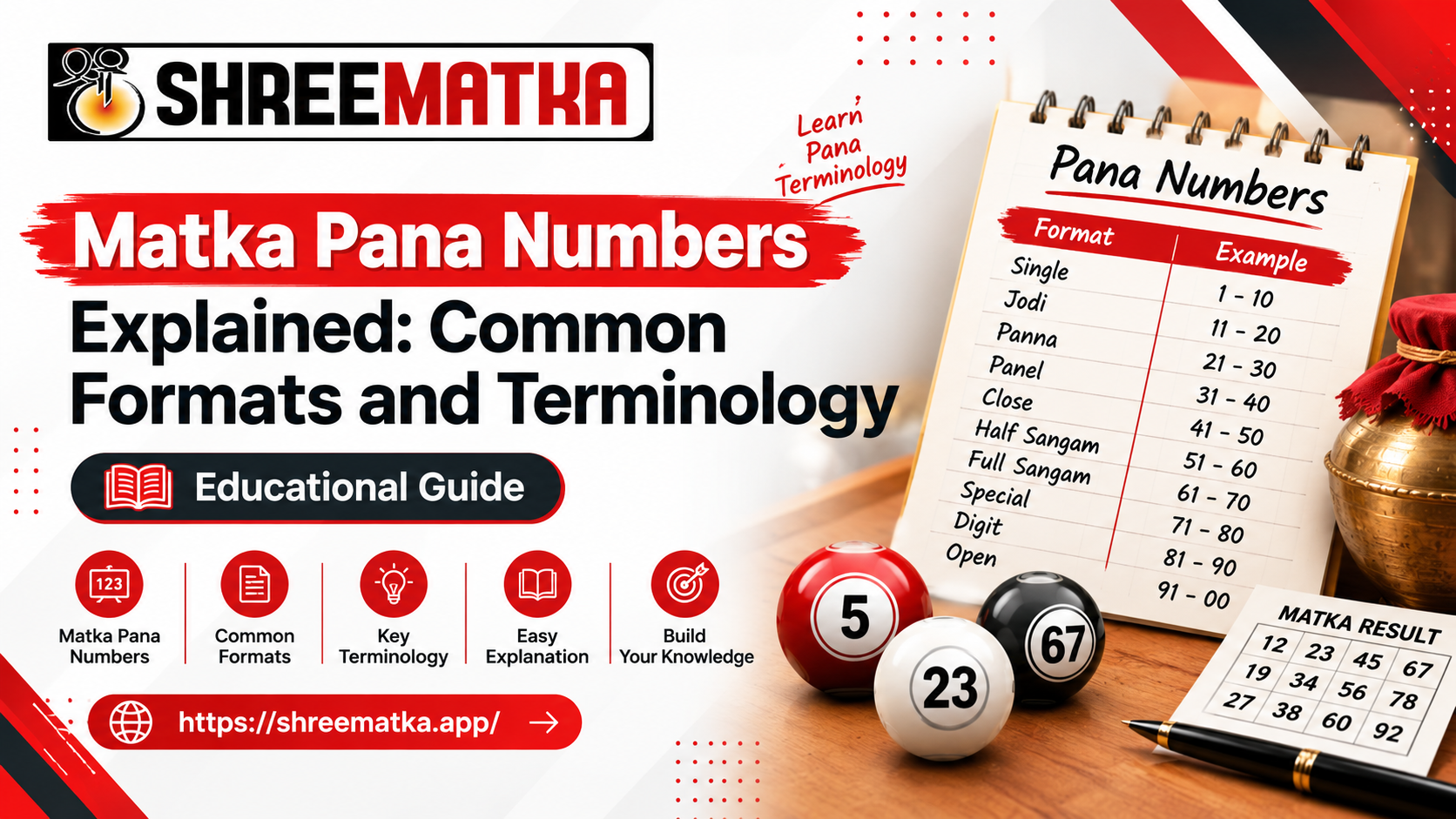
Within these terms, Matka Pana Numbers play an important role in the manner the results are recorded. Simply put, a Pana is a three-digit combination that is used to represent the numerical outcomes data.
This guide for educators clarifies the meaning of Pana is, and explains the way three-digit combinations are classified--such as Double, Single and Triple Pana. It also explains how users can use historic chart layouts utilizing ShreeMatka's result data.
What Are Matka Pana Numbers?
Common Matka language, the word Pana (also known as Panna or Patti) refers to a 3-digit combination. If historical archives release numbers, individual numbers are put together into sets that are standard to guarantee the sameness across archives.
Understanding the reasons that three-digit groups are important will require examining how the the data that results are structured
- Format Structure Format Structure Pana typically consists of three numerals (ranging from 0-9) that are written in a unified manner.
- Entry for Close and Open Entries The result declarations usually publish one Pana in the beginning phase while another is released in the closing phase.
- The process of generating single digits is a part of the traditional method of keeping records; three digits in the Pana are added up in order to produce a single-digit number (taking the unit digit from the total).
Illustrative Formatting Examples
To understand the way an Pana recording is made, take a look at these non-biased examples:
- 123
- 245
- 567
Notice: These numbers are simply educational examples that are used to teach the layout and notation of digits. These aren't suggestions, predictions, tricks, or winning numbers.
Understanding the Three-Digit Pana Format
In the case of a reader who is first time, Matka results data may be classified into three distinct formats of numerical data depending on the length of the digits
- Single: A single number (0 to 9).
- Jodi: Two-digit number (00 up to 99).
- Pana: Patti The three-digit number (000 up to 99999).
This table of comparisons highlights the distinctions between these two formats.
| Term | General Format | Basic Description |
|---|---|---|
| Single | 1 digit | Single-digit format |
| Jodi | 2 digits | Two-digit combination |
| Pana / Patti | 3 digits | Three-digit combination |
Common Types of Pana Numbers
In Matka terms 3-digit Pana numbers are classified into three main structures based on the fact that the numbers repeat within the set.
Single Pana
The Single Pana is composed of three distinct, non-repeating numbers. Since no digit is repeated it is the most popular layout of numbers found in archives from the past.
- Structural Examples: 135, 248, 369.
Double Pana
Double Pana is a Double Pana occurs when two of the three digits in the same set and the third differs.
- Structural Example 112 (where 1 is the repeating digit).
- Other Examples: 336, 779.
Triple Pana
Triple Pana: A Triple Pana consists of three identical, repeating numbers. When used casually, the term is commonly called"Jackpot Pana. "Jackpot Pana."
- Structural Example Structural Example: Structural Example: (where the three digits of 111 are the same).
- Other Examples: 000, 555, 888.
Each of these formats shouldn't be taken to mean that one is more useful and likely to be more beneficial or beneficial than the other. They are simply describing the pattern that appears visually repeating the numbers.
Pana, Patti, and Panna: Understanding the Terminology
The website the region or forum, you might see different versions of the term Pana:
- Pana Panna Panna is one of the commonly utilized terms in modern digital platforms.
- Patti is a term that has been used for ages commonly used in offline market.
- Panel/Patta: Alternate regional spellings are sometimes found in archives.
However, despite these spelling variations each of these words refers to the same idea of a three-digit sequence. Knowing that the terms are interchangeable can help prevent confusion when you read data that come from various regional sources.
Pana vs. Jodi
It can be helpful to compare Pana numbers against Jodi numbers as they often appear alongside each other in historic tables.
| Feature | Pana / Patti | Jodi |
|---|---|---|
| General Format | Three numbers (000-999) | Two digits (00-99) |
| Example | 123 | 12 |
| Common use | Opening / closing panel information | Central combined results Information |
| Historic records | Shown in Pana charts | In Jodi charts |
When the Pana records the three-digit opening or closing figures while the Jodi is the two-digit central result that is derived by mixing the single digits that are derived from the Close and Open sessions. The two-digit results are classified through a separate Jodi table.
How Pana Numbers Appear in Matka Charts
If you are looking at archived tables of results, Pana entries are systematically separated into dates, names of markets, as well as derived digits.
A typical chart row shows:
- Date and Day: Denotes the exact date of the entry that was archived.
- Market Name: Defines the time of the event (e.g., Kalyan, Karnataka Day).
- Open Pana: The opening three-digit number.
- Jodi: The most central two-digit combination.
- Final Pana: This is the last three-digit number.
For an understanding of how historical documents are actually published Explore resources similar to those on the Kalyan Pana chart or read about a specific to the market Pana chart illustration with dedicated information pages.
How to Read a Pana Chart
If you're viewing charts from the past at first, take this step-by-step guide to understand the chart's layout:
- Find the Market: Look at the title to determine the market table that you are watching.
- Find the date range Find the week, date or the day that you entered.
- Find the open Pana Locate the three-digit code to the left of the row.
- Find the Jodi Take a look at the figure with two digits in the middle.
- Locate Close Pana: Look for the three digits located on the right-hand side of the row.
- Be aware of historical context: Recognize that the entries are all based on archives of events from the past rather than current or forecasts for the future.
Pana Charts and Historical Records
Keeping the same historical Pana charts is crucial to ensure the accuracy of records. The numbers within Pana charts Pana are typically presented in ascending order to ensure consistency across different platforms.
The archived charts can help users track previous records, check the historical data outputs and comprehend how formatting is done. It is important to know the difference between looking over the archived data and attempting to predict the future. These numbers are merely documents from the past.
Common Misunderstandings About Pana Numbers
The first timers often face the common misconceptions about Matka Pana numbers:
-
Myth: Previous Pana numbers determine future outcomes.
-
Truth: Past entries can be considered to be only historical. An earlier entry doesn't have any influence on or predict the future.
-
Myth: A frequent appearance of Pana appears to be "due" to come back.
-
In reality, numerical sequences occur randomly. Historical repetition is not a guarantee of future repeats.
-
Myths: Pana terminology reveals "fixed" numbers.
-
The truth is that terms like Triple Pana, Single Pana, Double Pana, and Triple Pana define digit patterns and not predictions of performance or "sure-shot" figures.
-
Myth: Charts are stuffed with secret predictive formulas.
-
The truth is that historical charts provide archives of previous results, much like the logs of sports scores or weather reports.
To learn more about how to navigate terminology safely, read instructional guides posted by the ShreeMatka website.
Matka Pana Numbers and Responsible Information
While reading or researching Matka-related issues, remember these safety and legal principles to your mind:
- Local regulations: The laws regarding gambling differ significantly based on your region, state or region. Make sure you are aware of local laws prior to engaging with any gambling website.
- Age Restrictions: Accessing casino or gambling information requires the legal minimum age (typically either 18 or 21+).
- There is no predictive value: Educational terms guides were created for clarity of information. The use of any chart, system or formula is able to guarantee that future results will be achieved or remove the risk.
Conclusion
The understanding of Matka Pana Numbers comes down to understanding fundamental three-digit formatting conventions. No matter if they are referred to as Pana, Panna, or Patti the figures can be classified into single, double, or Triple formats based on the repetition of digits. When you understand how single digits, Jodis, and Panas appear in historic result charts, viewers can navigate the archives of their records with a clear as well as an objective view as well as a knowledge of basic formatting rules.
Frequently Asked Questions
1. What do you think are Matka Pana numbers?
Matka Pana numbers (also called Panna or Patti) are 3-digit numerical combinations (such as 123 and 456) employed in Matka language to document closed and open result declarations.
2. What's the main difference in Pana Jodi and Pana Jodi?
Pana is a 3-digit number combination (e.g. the number 147, for example.) and a Jodi is a two digit number (e.g. (58, for example)) created by the combination of one open and closed digit.
3. What is a Single Pana?
Single Pana is a Single Pana is a three-digit format made up of three distinctive numerals that do not repeat for example, the numbers 248 or 369.
4. What are Double Pana and Triple Pana?
Double Pana is a Double Pana containing two repeating figures and a single digit (e.g. 112). The Triple Pana consists of three identical repeating numbers (e.g. the eleven).
5. Do past Pana figures predict the future Matka performance?
No. The historical Pana numbers are strictly historical records. Trends in previous results or digit frequencies are not able to forecast or guarantee the future results.
Disclaimer
Visiting and browsing this website is strictly at your own risk. All information available here is for informational and entertainment purposes only and is based on number calculations. We are not associated or affiliated with any illegal Matka business. We make every effort to follow the rules and regulations of the regions from which the website is accessed. There is a chance the website may be banned in your area; if you continue to use it after that, you alone are responsible for any damage, loss or legal action that may follow. Satta Matka may be illegal in your jurisdiction — please be aware of and comply with your local laws. Gambling can be addictive; players must be 18 or older, and underage gambling is strictly prohibited. If you do not agree with this disclaimer, please leave the website immediately. Copying any content posted on this website is strictly prohibited.