
Website Permissions: A Guide to Safe Browsing
Website Permissions: A Guide to Safe Browsing
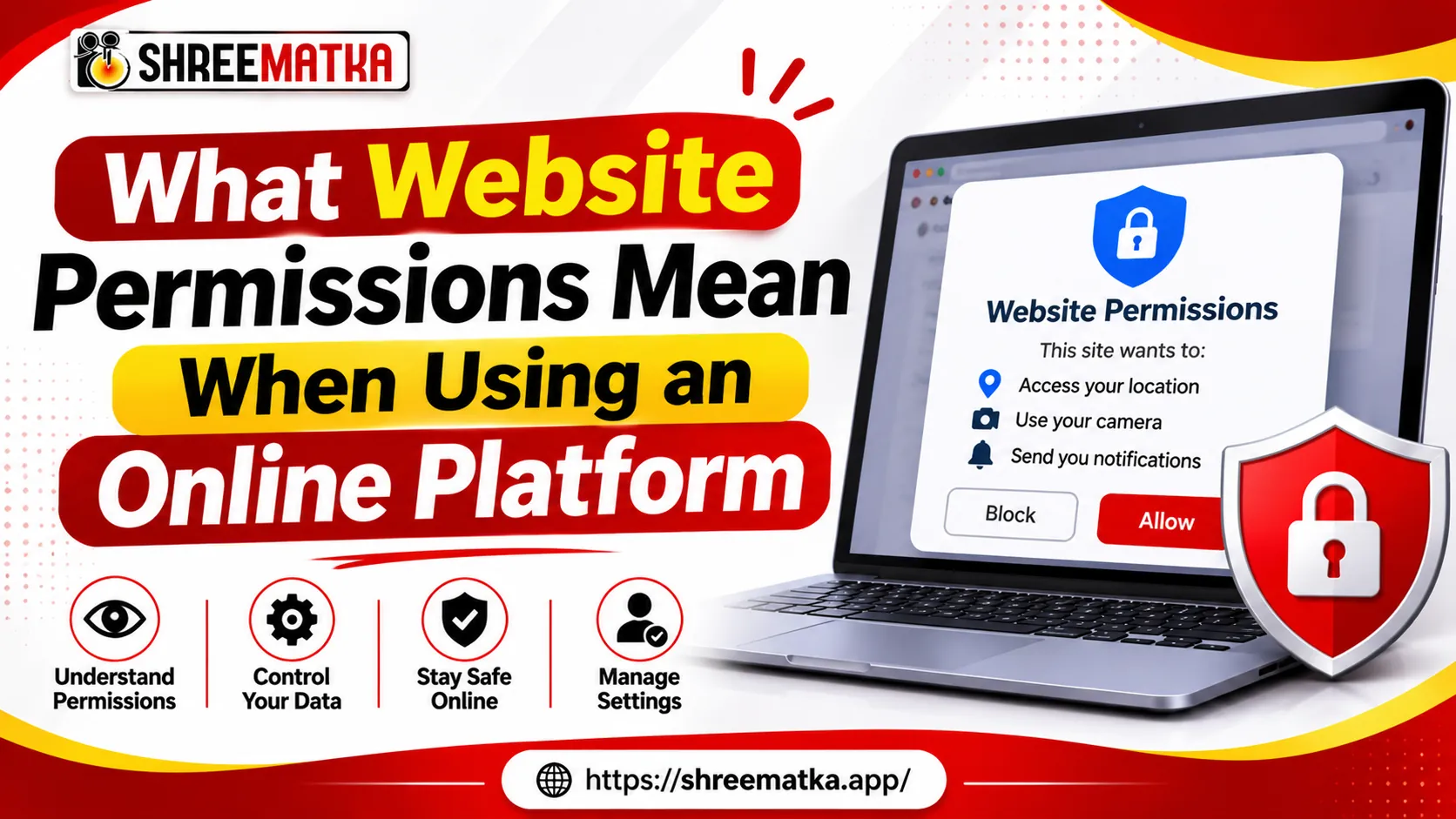
What Website Permissions Mean When Using an Online Platform
When traveling a web platform, users might also on occasion see requests soliciting for permission to get admission to sure capabilities in their tool. These requests can appear whilst commencing a website, using a particular function, or converting account settings. Although they will appear like small pop-ups, know-how them is a vital part of surfing thoroughly.
The time period website permissions refers to the admission to a user that allows an internet site to have unique device features or facts. Depending on the website and the characteristic getting used, those permissions can also include right of entry to vicinity, notifications, digicam, microphone, or different browser features.
For visitors exploring online data structures together with ShreeMatka, understanding what these requests imply can help them make knowledgeable choices and keep higher management over their privacy.
What Are Website Permissions?
Website permissions are settings that decide whether an internet site can use sure capabilities to be had through a browser or tool. For example, an internet site would possibly request permission to ship notifications. Another internet site may also ask for a region to get an entry to offer region-primarily based data. The browser typically displays an activation so that customers can permit or deny the request.
These permissions are not robotically important for every website. A platform that specially shows text, charts, or widespread facts might not want to get entry to a device's camera or microphone.
The critical point is that customers have to understand why admission is being asked earlier than approving it.
Common Types of Website Permissions
Different websites request different permissions depending on their functions. Some common examples consist of:
| Permission | What It Allows | When It May Be Useful |
|---|---|---|
| Location | Access to approximate or precise device location, depending on settings | Location-based services |
| Notifications | Send browser alerts and updates | Important website announcements |
| Camera | Use the device camera | Video calls or image capture |
| Microphone | Use the device microphone | Voice communication |
| Clipboard | Read or interact with copied content, subject to browser restrictions | Specific copy-and-paste features |
| Pop-ups and redirects | Open additional browser windows or redirect pages | Certain legitimate website functions |
Not each permission is available in each browser, and the extent of get entry can vary in keeping with the tool and browser settings.
Why Do Websites Ask for Permissions?
A website might also request permission due to the fact a selected function can't work without getting right of entry to a tool feature.
For instance, a video meeting platform needs a camera and microphone to get entry for video calls. An internet site providing area-based offerings may additionally request region access to display applicable facts.
There are also websites that request permissions for elective capabilities. Notifications are one instance: a person might also pick out to receive updates, but browsing the principal website won't require them.
A permission request must have a clean connection to the function being used. If an internet site asks to get right of entry that appears unrelated to its purpose, customers ought to pause and not forget whether or not approval is essential.
Should You Allow Every Permission Request?
No. Accepting each request without checking can lessen control over personal statistics and device capabilities. Before allowing get right of entry to, don't forget these points:
- Understand the cause: Check what the website wants to get admission to and why.
- Consider relevance: Decide whether the requested permission is important for the feature.
- Check the website: Make sure you're journeying to the meant website and not an unexpected or suspicious page.
- Choose carefully: Denying an elective permission is reasonable if you no longer want the function.
- Review permissions later: Permissions can usually be modified through browser or device settings.
A permission activation is a request, not a guidance. Users can make their own selection.
How to Review Website Permissions in Your Browser
Most modern browsers offer controls for dealing with websites. The exact steps may fluctuate barely depending on the browser version and tool.
In Google Chrome:
- Open Chrome and visit the website.
- Select the website information icon near the address bar.
- Open the website settings or permissions section.
- Review the available permissions.
- Change man or woman settings in keeping with your preference.
In Microsoft Edge:
- Open the website in Edge.
- Select the website online records icon beside the address.
- Open permissions for the website.
- Review or regulate the access settings.
In Safari:
- Open Safari settings.
- Find the website-specific settings or privacy controls.
- Review permissions inclusive of digital camera, microphone, and area.
- Adjust the access as required.
On mobile devices, some permissions may also be managed through the phone's main Settings app.
What Happens When You Deny a Permission?
Denying a permission commonly prevents the website from the usage of the characteristic associated with that request. However, it does not always stop the whole website from operating.
For instance, if you deny notification access, you may nonetheless be capable of browsing the internet site usually. If you deny a digital camera entry to a video assembly platform, its video function won't work until entry is granted.
The effect depends on the website's layout and the feature concerns. If you convert your thoughts, you could normally revisit the browser settings and replace the permission.
Website Permissions and Online Privacy
Permissions are one part of online privacy, but they're no longer the best component customers should bear in mind. A website may also collect information through cookies, analytics tools, account forms, and other tracking technologies. Allowing or denying a browser permission does not automatically control every form of information collection.
For better privacy protection, users ought to:
- Read the internet site's privacy coverage.
- void granting unnecessary admission to device features.
- Keep browsers and gadgets up to date.
- Review permissions for websites they do not use.
- Be careful with unexpected links and unexpected permission prompts.
- Avoid sharing touchy records on web sites they do not trust.
For an informational platform, visitors should be able to recognize its primary motive without feeling forced to approve unrelated device permissions.
Common Misunderstandings About Website Permissions
A few misconceptions can make permission requests difficult.
- How Do Website Notification Permissions Work?
No. Notification permission does not robotically furnish entry to the camera, microphone, or location.
- What Happens When You Deny Website Permissions?
No. Denying an optionally available permission does not imply the internet site is dangerous. It actually limits the right of entry to the asked characteristic.
- Permissions remain authorized forever
Not always. Users can commonly trade or revoke permissions via browser or device settings.
- Why Websites Request Location Access
No. Location access is most effective applicable to sure capabilities and offerings.
Understanding those variations allows customers to make extra confident browsing decisions.
Final Thoughts
Understanding website permissions is an easy but useful part of safe surfing. Each request gives customers an opportunity to determine whether a website really wishes access to a selected tool feature.
Rather than accepting each set automatically, take a moment to check the questions, get permission, keep in mind its cause, and adjust your settings on every vital occasion. This allows creating a more informed and privacy-aware online experience.
When exploring ShreeMatka or any other online statistics platform, evaluate website permissions carefully and use browser settings to stay in control of your right of entry to possibilities. Always follow relevant neighborhood laws and age restrictions when using online platforms.
Frequently Asked Questions
1. What does internet site permissions mean?
Website permissions are browser settings that manage whether an internet site can access certain device capabilities, including notifications, location, digital camera, or microphone.
2. Is it secure to allow website permissions?
It depends on the website and the permission requested. Users need to check whether or not the access is relevant to the feature they want to use before approving it.
3. Can I use a website without permissions?
In many cases, sure. Most informational pages may be considered without granting non-obligatory permissions. Some features may not be available if their required entry is denied.
4. How can I remove permissions from an internet site?
Open your browser's website settings or privacy controls, select the relevant internet site, and change or revoke the permissions you formerly allowed.
5. Do website permissions affect private privacy?
They can. Certain permissions offer the right of entry to tool features or facts. Reviewing them often helps users keep manipulate over what websites can get entry to.
6. Should I allow notifications from every website?
No. Allow notifications only from websites whose updates you sincerely need to receive and which you agree with.
Disclaimer
Visiting and browsing this website is strictly at your own risk. All information available here is for informational and entertainment purposes only and is based on number calculations. We are not associated or affiliated with any illegal Matka business. We make every effort to follow the rules and regulations of the regions from which the website is accessed. There is a chance the website may be banned in your area; if you continue to use it after that, you alone are responsible for any damage, loss or legal action that may follow. Satta Matka may be illegal in your jurisdiction - please be aware of and comply with your local laws. Gambling can be addictive; players must be 18 or older, and underage gambling is strictly prohibited. If you do not agree with this disclaimer, please leave the website immediately. Copying any content posted on this website is strictly prohibited.