
What Information Should a Transparent Online Results Platform Provide?
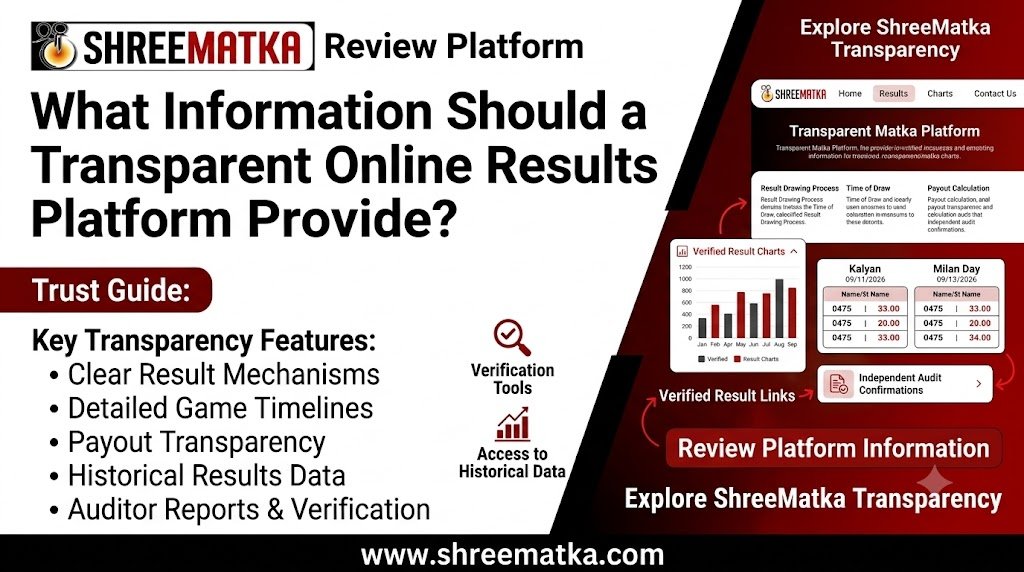
In the digital age, web users look to online platforms to provide them with time-sensitive information, numerical data, and historical records. Whether checking a sports game score, financial market index, or daily number draw results, users value a transparent platform that clearly displays information, data, and numbers without confusion. Transparency builds a visitor's digital trust in the website by giving them an understanding of how information is collected, compiled, and presented.
When looking up a number on an online platform, a visitor needs intuitive guidance on what exactly the website offers, where to find the number, when the information was published or last updated, and if the data represents current or historical records. They also want to know how to understand the workings of the website, policies, and contact details.
For a visitor looking to get reliable information, a choice of a Transparent Matka Platform means choosing a website that values clarity, intuitive navigation, and clear disclosure of information. However, it does not mean that a transparent online results portal promises accuracy of every third-party or external result, chart, or data compilation that it provides. In truth, a transparent results platform means a fair presentation of available information, sources, dates, guidelines, and limitations.
What Does Transparency Mean for an Online Results Platform?
Generally speaking, the requirement of transparency applies to an information-based website as one has to provide the most relevant data, information, and details to make it easy for any visitor to grasp what particular chart, number, or web section refers to.
It should have labels of every data table stating the time when the data was gathered or the website was last updated, historical records structured in an organized manner, background details concerning the website, contact options, Terms & Conditions, Privacy Policy, and guidelines concerning the website’s data usage responsibility. Having an organized online results platform is superb to orient every website visitor, seek information, learn about the website’s inner workings, and contact the site managers or admins.
Clear and Easy-to-Understand Result Information
When a visitor lands on a website, they immediately want an easy understanding of the kind of information displayed on the page. The website is not a guessing game - and the more straightforward a results-based portal structures its result tables, the more clarity a visitor has when skimming through a specific report.
The following elements help an online portal have clear result information:
- Headings: All result tables, cards, or sections should have a heading that describes the data that the specific section contains.
- Formatting: A consistent, readable format throughout the website's result tables, including similar grid styles, fonts, and colors, allows a visitor to instantly read through result tables without confusion.
- Result Tables or Charts: A transparent platform will organize all relevant numbers into clear tables making it easy for a visitor to scan through them without getting lost in ungrouped numbers.
- Labeling Information: Never assume that a visitor understands what a panel of numbers means. A transparent online results portal will clearly define what each individual panel represents, what time period it indicates, and what it should be used for to avoid misunderstanding or misinterpretation of the data.
- An information-based website should prioritize presenting the data clearly and concisely without using it as a space to give opinions, play recommendations, or guesswork tips.
- Dates and Time Information: One of the most crucial pieces of information for a results portal is having a clear indication of time or the specific date when a result, number, or chart was published. A visitor should never have to guess if they are looking at a current or historical record. A transparent online results portal should also indicate the website's publication or last update timestamps for easy reference.
The following transparency elements apply to dates and time information:
- Results Date: Every specific result, number, or draw should indicate the date when it was held or published.
- Publication Time or Update Timestamp: The results website should display a clear indication of when the data was added to the portal or when the website was last updated in general.
- Chart or Table Historical Dates: The date range for historical chart records, including weekly result tables, should be available to a visitor with ease.
By having all timestamps readily available, a visitor can tell the difference between a current, live, or recent record and a set of historical results.
Historical Results and Records
Many result-based websites allow a visitor to review past results to identify trends or see if their guessed numbers match a previous result. For a transparent results portal, it means that all historical records are presented in a well-structured, easy-to-scan manner that tells a visitor at a glance that a specific chart, number, or record is not up-to-date.
The following transparency elements apply to results and records:
- Date Sorting: A visitor should be able to sort through historical records by a specific date with ease. Ideally, the entire set of historical records should be sorted in chronological order.
- Table or Chart Formatting: A transparent online results portal will consistently format all result tables and charts, using panels that have a clean, readable format, and are easy to scan.
Having clear, accessible historical records ensures that a visitor can easily access the information that they need without having to sift through irrelevant data.
- Clear Website and Platform Information: Alongside presenting result or chart data, a transparent online results platform clearly states information about the website itself. A website visitor should not have to guess the scope, guidelines, or inner workings of a results portal, and having an "About" section is one of the most basic transparency requirements for an information-based website.
The following transparency elements apply to website information:
About Website Information
Some result-based websites offer general information about the portal in an "About" section. Ideally, an information-based website will have a clear description of its scope and what information it provides.
Content Scope Description
Many result-based websites have multiple sections, such as live results, historical number records, charts, and articles. A transparent online results portal will identify these website sections to give a visitor a general idea of what the website offers.
By clearly defining the scope of an information-based website, every visitor has a general understanding of the type of information that the portal offers. This transparency element is not a substitute for more detailed website guidelines, privacy information, or chart-specific guidelines, but instead is a general overview of an online portal's purpose.
Contact Information and Support
As a visitor browses an information-based website, they may find errors, visual inconsistencies, unclear policies, or other issues that require the website administrators' attention. A transparent online results portal will offer a variety of contact options for a visitor to identify and report problems or ask questions.
The following transparency elements apply to contact information:
- Contact Pages or Footers: Ideally, a visitor should be able to access a contact page or email address from the main navigation menu of the website.
- Web Contact Forms: A transparent portal will have a contact form option that allows a visitor to submit their message directly to the website administrators.
- Direct Contact Addresses: Wherever possible, a visitor should be able to find a direct contact address, such as an email, phone number, or other communication option listed clearly on the website.
- Response Time Guidelines: For visitor inquiries that do not require immediate response, such as general questions or observations, a results portal should state its response time guidelines.
By prioritizing accessibility, a transparent results portal makes it easy for visitors to report issues or reach out to the administrators directly.
Privacy Policy and Terms & Conditions
Another important transparency element for information-based websites is a Privacy Policy that describes the website's data collection practices and Terms & Conditions that describe the scope of a visitor's use of the website. In both cases, a transparent online results portal will make sure that both documents are available to every visitor at all times.
The following transparency elements apply to Terms of Use and Privacy Policy:
Privacy Policy
This document contains information about the website's data collection practices, such as what information about a visitor's browsing activity might be collected, how it is used, and whether additional analytics tracking software might be used on the website.
Terms & Conditions
This document describes the scope of a visitor's use of the website, its intellectual property guidelines, and a general disclaimer that the website provides informational resources only.
Website visitors will always find these two documents in the footers or website navigation menus of an information-based results portal, available at any time without additional searching.
Responsible and Clear Information Presentation
A transparent online results portal does not hide key information, present false claims, or use misleading language. For results-based websites, that means avoiding false advertising, such as promising results or guaranteed outcomes, using fake urgency to prompt unwise decisions, and failing to distinguish between website content and third-party advertisements or promotions.
The following transparency elements apply to responsible presentation of information:
- No Unrealistic Claims or Offers: A transparent results portal will not promise results, outcomes, or additional opportunities to a visitor browsing the website.
- Avoiding Fake Urgency: Promotional banners, countdown clocks, and similar prompts should be avoided on a transparent results portal, as they pressure a visitor into unwise decisions on impulse.
- Clear Labels for Informational Content: A visitor browsing the website should be able to distinguish between informational content, such as articles or guides, and promotions or advertisements.
Responsible Website Scope Descriptions
The website's informational scope should be described objectively, specifying that an information-based results portal does not offer official verification, regulation, or authority over any of its information. This document is not a substitute for additional advice from a qualified professional.
By avoiding false advertising, pressure tactics, and misleading language, an online results portal makes it easy for a website visitor to make responsible decisions when browsing the website.
Mobile-Friendly Information Matters
When browsing a results-based portal, some visitors want to check their daily results on the go, and a transparent online results portal will have responsive design elements that keep its content readable and accessible to mobile users. Website tables and result records should be easily readable on a smartphone screen, with no additional effort required from the visitor to zoom in or out.
The following transparency elements apply to mobile-friendliness:
- Responsive Table Formatting: A transparent results portal will keep its table records in a readable size that is appropriate for a smartphone screen or allow a visitor to scroll horizontally without effort.
- Readable Font Sizes: Fonts should always be large enough to be readable on a mobile display without additional effort.
- Well-Spaced Navigation Buttons: Navigation buttons and menus should have enough space between them to prevent accidental taps on a small mobile display.
- No Unnecessary Overlay Popups: When viewing result tables on a smartphone, a visitor should never have to dismiss multiple pop-up windows before accessing the actual table records.
By making sure that an online results portal is readable and navigable on a mobile display, a transparent website keeps its visitors engaged and able to access the information that they need without extra effort.
How ShreeMatka Presents Platform Information
As a results portal that values transparency and clarity, ShreeMatka offers a variety of informational and navigational elements that make it easy for a visitor to understand the scope of the website, its content, and its inner workings. Many elements on the ShreeMatka website have transparent presentation, including the following:
- Clear Website Sections: This results portal has an intuitive layout, dividing its content into website sections so that a visitor can immediately identify if the content is live results, historical records, articles or blog posts, or website guidelines.
- Simple Tables: ShreeMatka avoids unnecessary labels on its table records, organizing the data into clear, scannable records with minimal special formatting.
- Transparent Website Policies: ShreeMatka has a separate document for its Terms & Conditions and Privacy Policy, both of which are available in the website footer and describe the scope of a visitor's use of the portal and the website's data collection practices, respectively.
By offering these transparency elements on its website, ShreeMatka makes it easy for a visitor to navigate the portal and understand the website's information and policies.
Why Clear Navigation is Important for Transparency
Website developers and administrators should remember that intuitive visitor navigation is at the heart of digital transparency. If an information-based portal has valuable visitor resources or policies but fails to make it easy for a visitor to find them, the website fails at its most basic transparency requirements.
The following elements apply to intuitive website navigation:
- Live Result Information: Navigational elements, such as top menus or breadcrumbs, should make it easy for a visitor to reach website sections that contain relevant live result information.
- Historical Records: A results-based portal's transparent presentation of historical records makes it easy for a visitor to check previous results, identify trends, and ensure that the website properly displays its past data.
- Blogs or Articles: If an information-based portal has blog content, a transparent website will organize its content into clearly defined website sections, making it easy for a visitor to identify informative articles.
- General Website Policies: The most basic transparency elements for information-based portals are straightforward website policies, such as a "Terms of Use" document that describes a visitor's scope of use when browsing the website.
With transparent presentation of essential information, an online results portal makes it easy for a visitor to find what they need on the portal without extra searching.
Common Information Gaps on Online Results Websites
Not every online results portal is equal, and many websites fail at their most basic transparency requirements by providing inadequate or misleading information to their visitors. The following are some of the most common information gaps on results-based portals:
- Missing or Incomplete Dates: Some information-based portals fail to provide a clear indication of dates, such as not specifying when a particular result was recorded.
- Missing Information Labels: Some results-based portals fail to present their information in clearly defined sections, making it difficult for a visitor to identify what specific information a set of numbers represents.
- Inaccessible Historical Records: Some information-based portals hide their historical records or provide inadequate sorting options, making it hard for a visitor to check past results.
- Lack of Website Background Information: Some results-based portals fail to specify their general scope, such as not providing general information about the website's content and purpose.
- No Accessible Contact Information: Some information-based portals do not provide accessible contact options, such as not having a separate contact form or email address.
- Inaccessible Policy Disclaimers: Some results-based portals hide their policy disclaimers, such as not having a separate Terms & Conditions document or a Privacy Policy section.
- Inappropriate Advertising or Promotion: Some information-based portals fail to clearly differentiate between their informational content and third-party advertisements, promotions, or sponsored content.
- Unreadable Mobile Tables: Some information-based portals have improperly sized tables that are too large for a mobile display, requiring a visitor to zoom in or out to read the content.
By recognizing these common information gaps, visitors can recognize transparent online results portals and know which portals to avoid.
A Simple Transparency Checklist
For website developers, administrators, and visitors, a simple checklist of the most basic transparency elements can serve as a useful guide for what constitutes a transparent online results portal. The following are some of the most basic transparency requirements:
- Clear Labels: Are all relevant data tables labeled clearly so that a visitor knows what numbers they represent?
- Timestamp Labels: Are all timestamps presented clearly so that a visitor knows if a particular record represents current or historical data?
- Accessible Historical Records: Are all historical records presented clearly and in an organized manner?
- Simple Website Navigation: Is it easy for a visitor to navigate the website and find helpful information or website policies?
- About Website Information: Does the website have general background information so that a visitor knows what type of information the portal provides?
- Contact Information: Does the website have accessible contact options so that a visitor can get in touch with the administrators or report issues?
- Policy Disclaimers: Does the website have separate policy pages, such as Terms & Conditions and a Privacy Policy?
- Mobile Accessibility: Is the website's information presented in a manner that is easy to read and navigate on a mobile device?
- Responsible Language: Does the website avoid unrealistic claims and keep its language objective?
By following this simple transparency checklist, an online results portal can ensure that it provides a fair and informative experience for its website visitors.
Also Read: Daily Matka Chart Guide: Easy Explanation for Beginners
Conclusion
A transparent online results platform should make information easy to find, understand, and use. Clear result tables, visible dates and timestamps, organized historical records, simple navigation, contact information, and accessible website policies all help visitors understand what they are viewing.
Mobile-friendly design is also important because many people access results and other information from smartphones. Readable tables, clear labels, well-spaced buttons, and simple navigation can make the overall experience easier.
Most importantly, transparency is about presenting information clearly and honestly. An online results platform should explain its scope, distinguish current and historical information, avoid misleading claims, and make important policies easy to access. When these basic elements are in place, visitors can browse the website with a clearer understanding of the information being provided.
FAQ
1. What is a transparent Matka platform?
A transparent Matka platform is an online information-based website that clearly presents draw results, historical records, website policies, and chart guidelines without hiding or misrepresenting any information.
2. What information should an online results platform provide?
An online results platform should offer a clear presentation of result tables, dates and timestamps, historical records, website background information, contact information, Terms & Conditions, and Privacy Policy to ensure digital transparency.
3. Why are dates important on result pages?
Dates and timestamps are necessary to show a visitor if a particular record refers to current or historical data.
4. Why should historical results be clearly labeled?
Historical results should be clearly labeled to prevent a visitor from mistaking a past record for current data.
5. Why are privacy policies important on online platforms?
A Privacy Policy informs a visitor about the website's general data collection practices.
Disclaimer
Visiting and browsing this website is strictly at your own risk. All information available here is for informational and entertainment purposes only and is based on number calculations. We are not associated or affiliated with any illegal Matka business. We make every effort to follow the rules and regulations of the regions from which the website is accessed. There is a chance the website may be banned in your area; if you continue to use it after that, you alone are responsible for any damage, loss or legal action that may follow. Satta Matka may be illegal in your jurisdiction — please be aware of and comply with your local laws. Gambling can be addictive; players must be 18 or older, and underage gambling is strictly prohibited. If you do not agree with this disclaimer, please leave the website immediately. Copying any content posted on this website is strictly prohibited.