
Why Copying a Number Table Without Its Headings Can Change Its Meaning
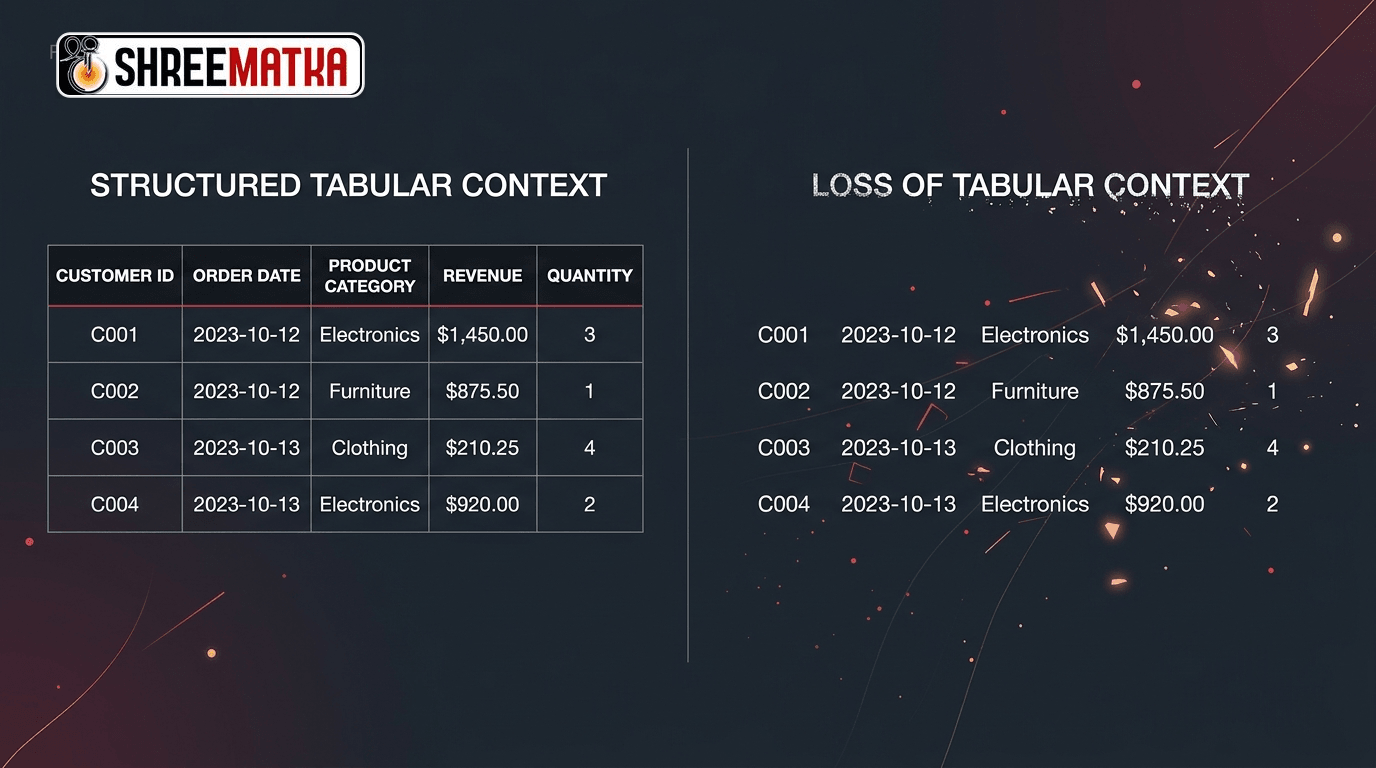
In data analysis, numbers never speak for themselves; they rely entirely on the structure that contains them. A digit or sequence of digits carries zero inherent meaning without a coordinate framework defining what measurement it represents, which entity produced it, and when it occurred. Yet in digital messaging, online forums, and casual research, people routinely copy and paste raw table rows while omitting the header row. Examining the dangers of a number table without headings reveals how easily quantitative context dissolves into confusion and false assumptions.
When you copy three numbers from a database table—such as [ 246, 52, 138 ]—and paste them into a spreadsheet or chat window without their column headers, you strip away their semantic identity. Is 246 an opening panel, a timestamp identifier, or a transaction count? Is 52 a combined central pair or an age metric?
Without persistent column definitions, positional order becomes an arbitrary guess. In this guide, we break down why table headings are functional data, how meaning shifts when labels are lost, and how to preserve context when transferring records.
1. Headings Are Not Decoration: The Concept of Semantic Anchoring
In computer science and structured data design, a table is not simply a decorative grid of boxes. It is a formal two-dimensional representation of a relational entity:
[Row Coordinate (Entity / Date)] x [Column Coordinate (Attribute / Metric)] = [Cell Value (Fact)]
If you eliminate the Column Coordinate, the formula collapses. You are left with an unanchored value that cannot be reliably evaluated.
Column headings perform three indispensable functions:
- Defining Attribute Types: A heading establishes whether a value represents an identifier, a continuous measurement, a currency, or a fixed-width code.
- Establishing Directionality and Sequence: Headings tell the human eye and software parsers which way data flows—whether columns represent chronological stages (e.g., Open session followed by Close session) or independent categorical dimensions.
- Preventing Positional Drift: If a data source updates its front-end to insert an extra diagnostic column (such as a session status flag), an automated script or reader relying on column headings can adapt effortlessly. A reader relying purely on memory of "column 2" will inevitably misread the data.
2. What Gets Lost When a Table Row Is Extracted
When an analyst or reader copies a snippet of raw rows from an archival chart—such as the records found in the ShreeMatka charts index—the loss of structural context occurs across four distinct dimensions:
A. Loss of Field Identity
Consider an isolated line of numbers: 140 - 59 - 469.
- With headings:
- Open Pana:
140 - Jodi:
59 - Close Pana:
469
- Open Pana:
- Without headings: An untrained reader might assume
140and469are independent variables, or mistake the central pair for an arithmetic ratio.
B. Loss of Temporal Anchoring
A row of figures without an explicit calendar date column (YYYY-MM-DD) cannot be verified against any historical record. If the row is pasted with a relative heading like "Tuesday", that record becomes permanently unlocatable once the current week concludes.
C. Loss of Unit and Format Rules
A header indicates formatting conventions, such as whether a single digit retains an explicit leading zero ("04") or represents an unrounded float. Stripping the header causes spreadsheet software like Microsoft Excel to automatically reformat strings into integers, dropping leading zeros and permanently corrupting fixed-width identifiers.
3. Illustrative Case Study: Fictional Data Before and After Extraction
To understand how drastically meaning deteriorates, observe the following illustrative dataset (purely fictional, presented for structural comparison):
Structured View (Complete Context Preserved)
| Record ID | Session Date | Market Category | Opening Panel | Central Jodi | Closing Panel | Status |
|---|---|---|---|---|---|---|
| SMP-101 | 2026-10-05 | Kalyan Archive | 239 | 48 | 189 | Verified |
| SMP-102 | 2026-10-06 | Milan Day | 120 | 35 | 348 | Verified |
| SMP-103 | 2026-10-07 | Time Bazar | --- | -- | --- | Holiday |
In this complete view, the reader knows immediately what each number signifies, which market line it pertains to, and why row SMP-103 contains dashes (a scheduled holiday, not missing data).
Unstructured View (Extracted Without Headings)
SMP-101  2026-10-05  Kalyan Archive  239  48  189  Verified
SMP-102  2026-10-06  Milan Day       120  35  348  Verified
SMP-103  2026-10-07  Time Bazar      ---  --  ---  Holiday
Now imagine this text is forwarded into a messaging channel where the tab spacing collapses:
239 48 189
120 35 348
--- -- ---
At this stage, the records have become completely untraceable:
- The market identities are gone.
- The calendar dates are erased.
- A third party receiving this message has no way of knowing whether
239represents an Opening value, a Closing value, or a cumulative total. - The dashes in row 3 look like an error rather than a documented holiday.
4. Technical Impact on Spreadsheets and Automation
When researchers copy raw table text into spreadsheet applications without headers, software applications make aggressive, unguided assumptions:
- Auto-Type Conversion: If a column contains fixed two-digit values like
03, Excel assumes the column is numeric and strips the zero to display3. If a header likeJodi_Stringwere present, a user would immediately recognize that the column should be imported asText. - Column Misalignment: If one row contains an empty cell or a dash, simple copy-pasting shifts subsequent numbers to the left, corrupting all downstream fields. A closing panel can slide into the central Jodi position without throwing a visible error.
- Database Import Failures: Structured databases enforce schema constraints. Feeding unlabelled CSV or TSV data into analytical engines requires manual mapping. Without verified headers, automated pipelines map values to the wrong database attributes.
For guidelines on how data integrity is maintained in analytical environments, see the platform's documented data sourcing policy.
5. How to Properly Preserve and Share Tabular Information
To ensure that numerical records remain accurate and verifiable when sharing or archiving:
- Always Include the Header Row: When copying table rows, highlight and include the top header row (
<th>). - Copy the Canonical Source URL: Never share a numerical table without appending the exact URL of the page where the data lives. A URL allows any reader to verify the numbers directly against the live database.
- Include the Capture Timestamp: Note the date and time when the table was extracted. If the table is updated later to correct a typo, the timestamp provides historical accountability.
- Use Standard Formats (CSV / Markdown): When pasting tables into plain-text channels, use Markdown table formatting or comma-separated values (CSV) with clear header names.
Source: https://shreematka.app/charts (Captured: 2026-10-09)
| Date       | Market     | Open | Jodi | Close |
| :--------- | :--------- | :--- | :--- | :---- |
| 2026-10-09 | Kalyan Day | 148  | 35   | 249   |
Frequently Asked Questions
1. Why does copying a table from a webpage into Excel sometimes drop leading zeros?
Spreadsheets default to detecting cell types automatically. When a table row is pasted without an explicit text header or text formatting, the spreadsheet program treats values like 07 as standard arithmetic integers and drops the leading zero, displaying 7. This alters the visual formatting of fixed-width records.
2. What is the fastest way to preserve context when saving a small snippet of a chart?
The most effective way is to take an uncropped screenshot that captures both the table headers and the browser address bar, or copy the data as a Markdown block that includes the top header row and the page URL.
3. Does changing the order of columns in a table alter the facts it represents?
No. Rearranging columns changes the visual sequence of fields, but does not alter the underlying historical facts, provided the column headings remain attached to their respective values. However, if columns are rearranged without updating their labels, the data becomes severely compromised.
4. Why do some online tables use dashes instead of zeroes?
A zero (0) represents an actual numeric value or mathematical sum. A dash (- or --) indicates the absence of an event, such as a market holiday or non-operating session. Using zero to represent a holiday would introduce severe errors into probability and statistical models.
Disclaimer
Visiting and browsing this website is strictly at your own risk. All information available here is for informational and entertainment purposes only and is based on number calculations. We are not associated or affiliated with any illegal Matka business. We make every effort to follow the rules and regulations of the regions from which the website is accessed. There is a chance the website may be banned in your area; if you continue to use it after that, you alone are responsible for any damage, loss or legal action that may follow. Satta Matka may be illegal in your jurisdiction — please be aware of and comply with your local laws. Gambling can be addictive; players must be 18 or older, and underage gambling is strictly prohibited. If you do not agree with this disclaimer, please leave the website immediately. Copying any content posted on this website is strictly prohibited.