
Matka Result Date vs Update Date: Key Differences
Matka Result Date vs Update Date: Key Differences
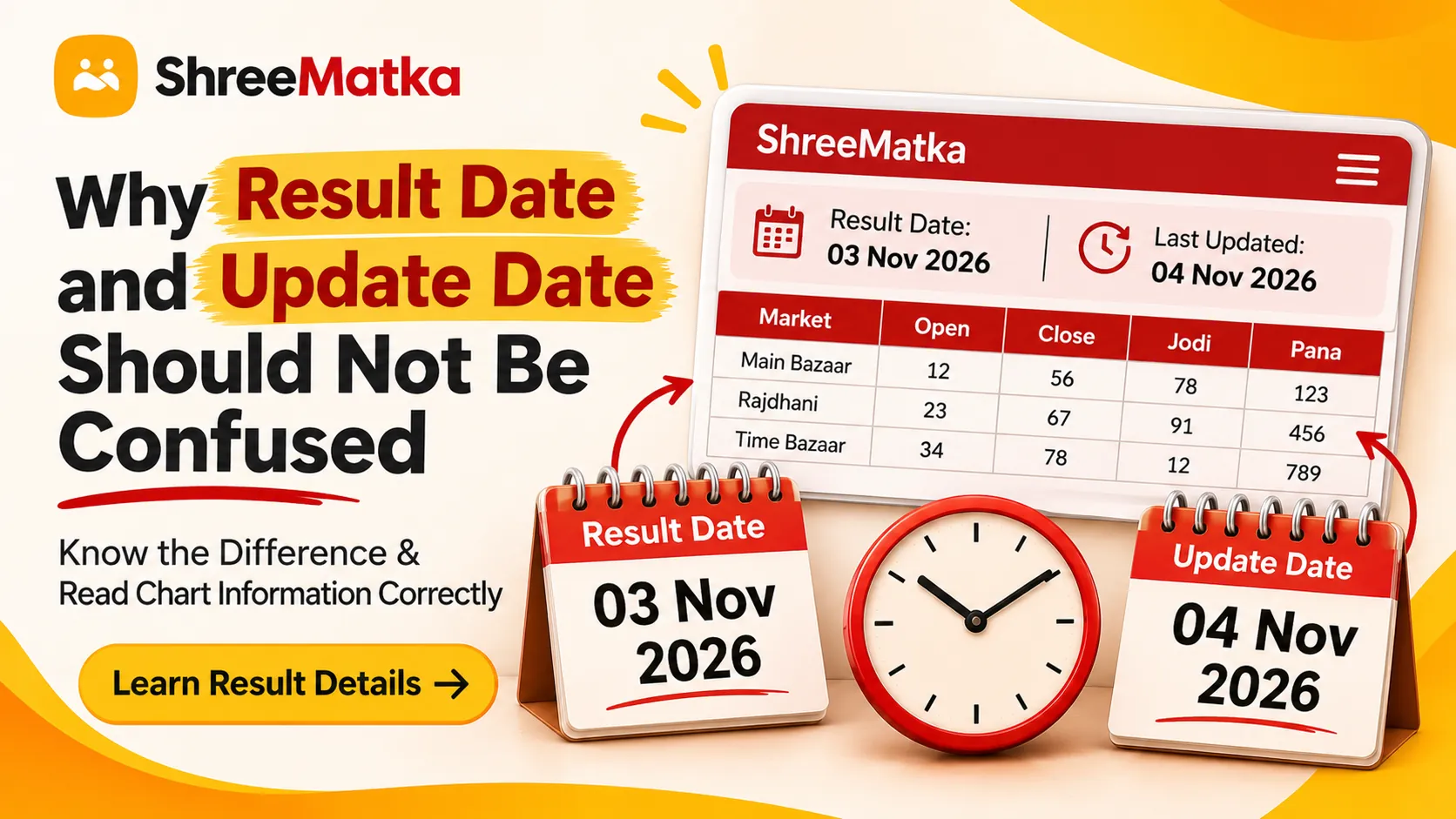
Why Result Date and Update Date Should Not Be Confused
When browsing online Matka charts or result pages, you could come upon dates: the result date and the update date. At first look, they might appear to intend the identical element. However, they serve different purposes.
Understanding this difference facilitates readers to interpret chart facts extra appropriately, pick out older data, and avoid confusion while checking an end result web page. This manual explains what each date represents and why both information rely while studying online end result records.
What Is a Matka Result Date?
The result date refers to the date associated with a selected end result or report. It tells readers which day the displayed statistics belong to.
For instance, a chart might incorporate a file labelled with the date 3 November 2026. This date identifies the day connected to that particular access.
The result date is beneficial while:
-
Checking statistics related to a particular day.
-
Comparing entries from exclusive dates.
-
Browsing older chart facts.
-
Understanding the chronological order of data.
-
It gives the time reference for the facts being displayed.
What Is an Update Date?
The update date refers to when a webpage or its records changed into an ultimate update. It describes the hobby of the internet site as opposed to necessarily identifying the date of the end result itself.
For example, a result page would possibly display an end result date of three November 2026 however show that the web page was updated on 4 November 2026.
This may want to appear when an internet site provides lacking statistics, corrects a display issue, changes a page format, or updates its data after the original date.
An update date can assist readers understand how lately a page was changed. However, it does not now routinely suggest that a brand new result belongs to that replacement date.
Result Date vs Update Date: Key Differences
Although each date provides beneficial information, their meanings are exclusive.
| Detail | Result Date | Update Date |
|---|---|---|
| Meaning | Date associated with a record | Date the page or information was modified |
| Main purpose | Identifies the relevant day | Shows when the page was last updated |
| Related to | A particular result entry | Website or page activity |
| Example | 3 November 2026 | 4 November 2026 |
| Helps with | Understanding record chronology | Checking page freshness |
The handiest manner to recall the distinction is that the end result date tells you which date the file belongs to, at the same time as the update date tells you when the displayed facts changed into remaining modified.
Why Do Websites Display Both Dates?
Displaying both dates could make on-line facts less complicated to understand. Readers can become aware of the date associated with a document while also seeing whether or not the web page has been changed more recently.
There are several reasons why a website may additionally show both:
- To keep a clear document history
An end result date allows organising entries chronologically. This makes it simpler to browse facts from distinctive days without relying best on whilst the page changed into modified.
- To communicate recent page changes
The update date offers readers an indication of how the website ultimately modified the content material. This can be useful when a page contains corrections or extra records.
- To reduce confusion
When each date is truly labelled, readers are much less likely to mistake a latest page update for a brand new result entry.
- To aid older information
Archived pages may additionally incorporate information from preceding dates but may additionally have been up to date later for formatting or renovation. Showing both dates facilitates maintaining that difference.
Example: Understanding Two Different Dates
Consider this fictional instance of a chart statistics web page:
| Page Detail | Displayed Information |
|---|---|
| Result Date | 3 November 2026 |
| Last Updated | 4 November 2026 |
| Record Status | Example archived entry |
In this situation, the file is related to 3 November. The page was modified on 4 November. The later update date does no longer change the unique result date. It certainly suggests that the page or its information become modified later.
This difference is in particular useful when browsing ancient facts or pages that have been maintained over time.
Common Mistakes to Avoid
Readers can misunderstand on line date information whilst labels are uncertain or while each date is handled as interchangeable.
Here are a few common errors to observe for:
-
Treating each date as equal: A result date and a replacement date describe various things.
-
Assuming a latest update is the latest result: A web page can be updated without including a new end result entry.
-
Ignoring the date beside a character document: Always take a look at which date belongs to the particular entry.
-
Overlooking archived records: Older records may also continue to be available even if their pages were up to date.
-
Assuming an update confirms accuracy: A current modification date does now not independently confirm the records displayed.
Paying attention to labels and the surrounding context can assist in preventing those misunderstandings.
How to Read Date Information More Carefully
When travelling an online chart or result facts page, follow a few easy checks:
-
Look for the label beside each date. Check whether it says Result Date, Record Date, Updated On, or Last Updated.
-
Identify the date attached to the man or woman document rather than depending only on the page heading.
-
Compare the displayed dates if they are different.
-
Check whether or not the web page is showing current information or an archived record.
-
If the labels are doubtful, consult the website's clarification or contact its support team rather than making assumptions.
These steps help readers recognize how statistics is organised without difficult web page activity with file dates.
Final Thoughts
Result dates and update dates can also appear close collectively on an online chart page, but they speak exclusive information. The end result date identifies the day related to a file, at the same time as the replace date suggests while the web site or its content changed into final changed.
Understanding this difference makes it easier to browse chart statistics, realize archived entries, and avoid unusual date-related misunderstandings.
When exploring on line end result records, continually study the date labels carefully and don't forget the context wherein every date seems. For trendy information, you could explore chart facts and their date labels on ShreeMatka. Always follow applicable local laws and take into account that historic statistics no longer are expecting destiny consequences.
Frequently Asked Questions
1. What does Matka's result date suggest?
A Matka result date refers to the date related to a specific result access or report on a chart facts web page.
2. What is an update date on a result website?
A replace date shows when the webpage or its information changed into last changed. It does not necessarily represent the date of the displayed result.
3. Can the result date and update date be specific?
Yes. A web page can be modified after the date related to its unique file. For example, a file might also belong to three November while the page becomes up to date on four November.
4. Does a brand new update date mean a new result has been posted?
Not always. The internet site may additionally have corrected present statistics, changed formatting, or made another amendment. Readers should check the real document information.
5. Why ought to I check the result date before reading a chart?
Checking the end result date facilitates perceiving which day a document belongs to and makes it less difficult to recognize ancient records in chronological order.
Disclaimer
Visiting and browsing this website is strictly at your own risk. All information available here is for informational and entertainment purposes only and is based on number calculations. We are not associated or affiliated with any illegal Matka business. We make every effort to follow the rules and regulations of the regions from which the website is accessed. There is a chance the website may be banned in your area; if you continue to use it after that, you alone are responsible for any damage, loss or legal action that may follow. Satta Matka may be illegal in your jurisdiction - please be aware of and comply with your local laws. Gambling can be addictive; players must be 18 or older, and underage gambling is strictly prohibited. If you do not agree with this disclaimer, please leave the website immediately. Copying any content posted on this website is strictly prohibited.